


Fasting isn’t just about skipping meals. And that is one of the first things people get wrong about dieting. The other thing, if I ask it as a question, is how often an adult should eat in a day? The most common answer would be, ‘three times a day’. Breakfast, lunch, and dinner. It sounds orderly, reasonable, and popular. But it is one of the big costly assumptions in human nutrition.
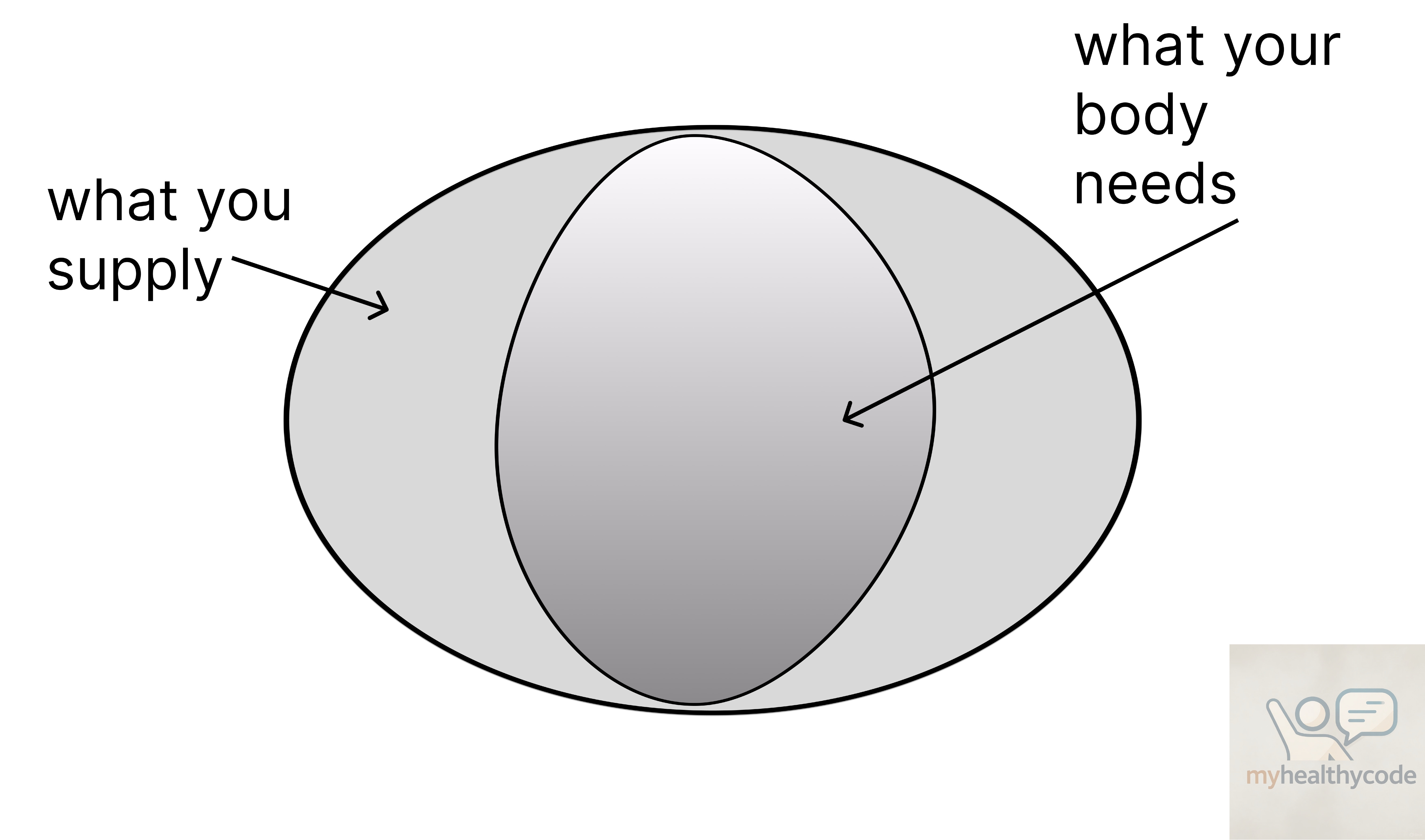
We often assume that everybody functions the same way. That every person is doing the same level of activity and expends energy at the same rate. That appetite, availability, hunger, routine and habit are valid indicators of time to eat.
The when and how often we should eat should never have been a one-size-fits-all prescription. The clock on the wall is important, but not as important as tailoring nutrition to a reasonable balance between energy intake and energy expenditure.
Imagine four empty containers, each capable of holding 2 litres of water. Each drains at a different rate. And three times a day, you have to pour a handful of water into each of them. One drains quickly. Another slowly. The third hardly drains at all.
Over time, the container that drains slowly will overflow and collect in the gutter on the floor. The container that drains quickly will run dry and become deficient, while the slow-draining one remains fairly balanced. The difference isn’t in the amount poured into each container, but rather in what is needed based on usage. We should consider this when discussing food intake.
Some people are more active and burn energy quickly, while others are more sedentary and tend to store excess energy. Many individuals can conserve energy more efficiently due to their environments and the facilities available to them. Yet, modern eating patterns completely overlook these differences. Nowadays, people wake in a midnight-fed state, still constantly replenishing energy that hasn’t yet run out.
The result is a predictable overflow of energy, which I will call energy dumping. Excess energy is stored, primarily as fat, and waits for a period of shortage (fasting), and then the body can use it. That day never happens with the three-times-a-day eating pattern. Over months and years, this accumulation becomes obvious, contributing to obesity, insulin resistance, type 2 diabetes, cardiovascular disease, stroke, and even cognitive decline. Global health data from organisations such as the World Health Organisation continue to show rising rates of these metabolic diseases. It is not a problem of what we eat. It is a problem of not knowing ‘how much energy we truly require’ and ‘how often we should eat’.

You might be wondering why all this information is important. A period of not eating is actually a form of dieting, not just a gap in your diet. Various terms have been used to describe this practice, including time-restricted eating and intermittent fasting. These approaches aim to maximise the benefits we receive from food. You would agree that travelling with excess luggage you don’t need can make the journey stressful. In contrast, carrying a lighter load will make life sweet. Among the benefits are increased insulin and leptin sensitivity; reduced body fat; elevated ketone levels; reduced resting heart rate and blood pressure, and increased heart rate variability; and reduced inflammation.
Let’s conclude by acknowledging that three meals a day isn’t science. It’s a habit deeply rooted in modern traditions passed down to us. Our metabolism does not respond positively to these practices; instead, it reacts to demand, and anything outside of these established patterns may negatively impact our well-being.
Yours sincerely
Dr Agu S.A
Latest on YOUTUBE
Your Bain controls your reality. Here is how to re-direct it.
REFERENCE:
Parr EB, Devlin BL, Hawley JA. Perspective: Time-Restricted Eating-Integrating the What with the When. Adv Nutr. 2022 Jun 1;13(3):699-711. doi: 10.1093/advances/nmac015. PMID: 35170718; PMCID: PMC9156382.